The Short Version
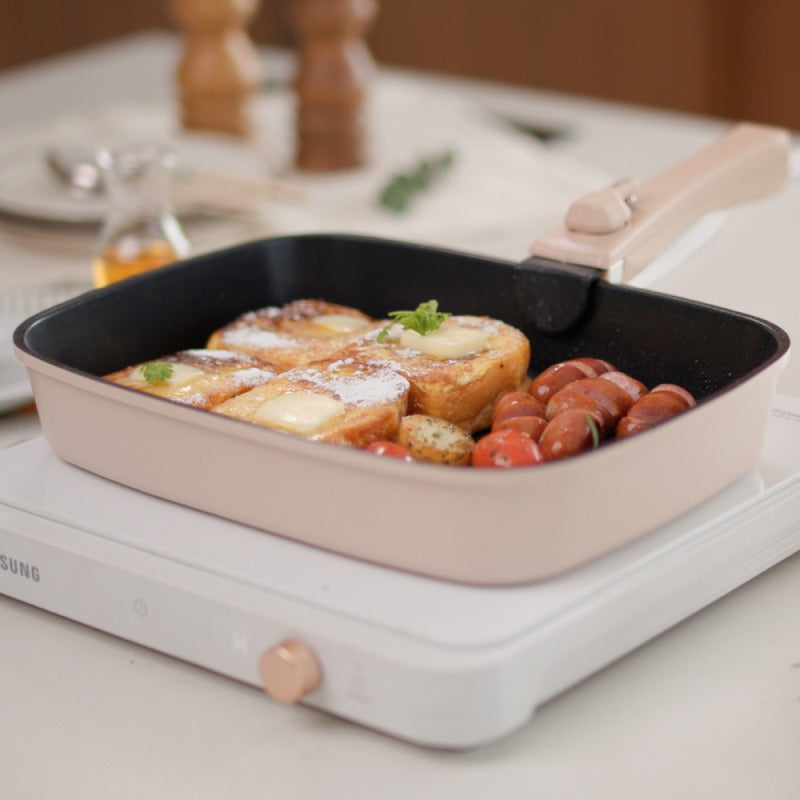
A rolled omelet looks like a dexterity test, but the pan and heat setup do much of the work. A rectangular cooking area gives the egg a predictable edge, moderate heat keeps the sheet flexible, and a coated surface gives each layer time to release before the next pour.
Why the rectangle helps.
Rolled omelets are built in layers. Straight sides make it easier to create a consistent width and give the spatula a clear direction of travel. The pan does not perform the roll for you, but the geometry removes one variable: instead of chasing a circular edge, you build a repeatable rectangle.
Moderate heat gives you time.
Very high heat can set the bottom before the top is ready to fold. Start over low-to-medium heat, add a thin film of oil if needed, and pour only enough egg mixture to create a thin sheet. You want the surface set enough to move but still soft enough to bond with the next layer.
Roll in stages, not one dramatic motion.
Lift the far edge with a silicone turner or chopsticks, fold a small section toward you, then continue in two or three controlled turns. Slide the roll to the far side, lightly re-oil the exposed surface if needed, and add the next thin layer. Let it flow beneath the existing roll so the layers connect.
Finish with shape and rest.
Once the final layer is rolled, give each side a brief moment against the pan to set the shape. Move the omelet to a board and let it rest before slicing. The cleaner the surface and the more even the heat, the less force you need during the roll.
Evidence + Limits
Results vary with egg mixture, burner output, pan condition and technique. Think of this as practical cooking guidance—not a promise of perfect release every time.
When a result comes from a test, we show the setup and conditions with it so you can see what was actually measured.
BOOHGLE US
Rolled omelets: shape, heat + release.
A cleaner rectangle, moderate heat and the right moment to roll make this technique far less mysterious.

THE SHORT VERSION


RELATED STORIES